Cleveron's net profit tripled in 2025 - from €886,447 to €2.7 million. Revenue grew a modest 4.6%. In our annual report conversation, our CFO explains the deliberate shift behind that gap: why we moved from chasing volume to chasing margin, and what it took to make it work.
Two numbers, same company, same year. So what happened in between?
The short answer: 2025 wasn’t a year of chasing more revenue. It was the year we changed what kind of company we wanted to be.
We sat down with our CFO, Pirgit Lohk, to find out, and the short answer is that 2025 wasn’t a year of chasing more revenue. It was the year we changed what kind of company we wanted to be.
👉 Download the report – cleveron-annual-report-2025-eng
From volume-first to profit-first
“We made a radical shift from a volume-first model to a profit-and-margin-first model,” our CFO, Pirgit Lohk, explains.
That meant rebuilding pricing principles from the ground up and leaning hard into standardisation, reducing the custom, one-off work that had quietly been eating into margins for years. It wasn’t a reaction to a crisis. It was a deliberate call.
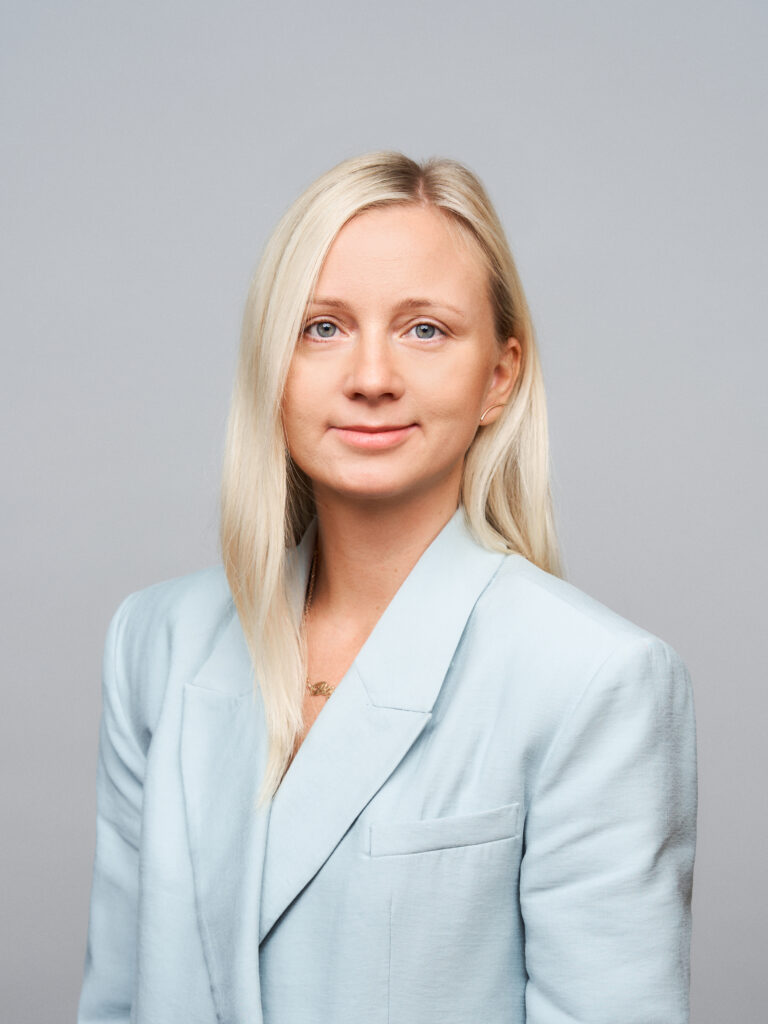
“To stay agile and fund sustainable innovation in a hyper-competitive market, you must have total clarity on where your capital comes from and where it goes.”
– Pirgit Lohk, CFO of Cleveron
That clarity meant making the full cost structure transparent, then cutting what Pirgit Lohk calls the “nice-to-have” and “legacy” rows from the sheet, trimming the “fat” so the company could move faster.
Three things drove the shift in practice:
- A strict product steering function, judged on clear, immediate ROI;
- An honest audit of the portfolio, cutting loss-making lines to free up resources for the profitable core;
- A push to eliminate operational waste through full cost transparency across every product and service;
Why revenue and profit grew at such different speeds
Here’s the part that’s easy to miss if you’re not living in the spreadsheets – revenue growth and profit growth don’t have to move together, and in 2025, at Cleveron, they deliberately didn’t.
“Top-line revenue growth is vanity, bottom-line efficiency is sanity. We didn’t just bring in more euros, we drastically increased how many cents we kept from every single euro earned.”
Says Pirgit Lohk.
The mechanics behind that: gross margin improved by 6 percentage points, from 40.1% to 45.8%. Fixed costs, meanwhile, stayed exactly flat as a share of revenue, at 35.4%. With margins rising and the cost base holding steady, almost every additional euro of revenue flowed straight through to the bottom line.
The knock-on effects show up across every profitability measure. Operating profit margin more than doubled, from 4.2% to 9.2%. EBITDA grew from €3.1 million to €4.6 million. And Return on Equity, the clearest read on how hard the company’s capital is working, jumped from 17.2% to 39.0%.
Different angles, same conclusion: this wasn’t incremental improvement, it was a structural change in how efficiently the business converts revenue into value.

The number our CFO is proudest of
It’s not the profit figure. Its sales revenue per employee is up 23%, to €244,000, from €198,000 the year before.
That’s the product of a leaner organisation: average full-time headcount dropped from 138 to 117 over the year, through restructuring. More revenue, delivered by fewer people.
“Achieving higher output and revenue with a leaner team is the ultimate proof that our people are operating with shared goals, clearer ownership, and exceptional productivity.“
Says CFO of Cleveron.
Restructuring of that scale is never just a numbers exercise; it touches people directly. Our CFO, Pirgit Lohk, points to the cultural shift as the hardest part: moving the organisation away from a “say yes to every client customisation” instinct toward a disciplined “standardised scalability” framework, something the leadership team fully aligned on by Q3 2025.
There’s a wry honesty to how Pirgit Lohk frames the internal reception, too: “Show me an employee who actually wants to work for a loss-making company.” The changes, in other words, weren’t a hard sell.
What a stronger balance sheet actually buys you
By year’s end, Cleveron’s free cash balance had grown to €7.2 million, up from €2.8 million – a direct result of the leaner model, the stronger margin, and tighter working capital management.
For our CFO, that cash position unlocks two things: independence and trust.
“It proves to our stakeholders that our strategic pivot wasn’t just an exercise on paper. We don’t just create value in spreadsheets, we actually bring that hard-earned money home.“

What comes next
Looking to 2026, our CFO, Pirgit Lohk, sums up the mandate in three words: Maintain, Develop, Scale.
That means holding on to the profitability gains of 2025 while turning attention back to top-line growth, this time from a self-funded, disciplined base rather than a volume-chasing one.
Internal modernisation and AI adoption are identified as priorities, alongside continued work on the company’s 2030 sustainability goals, including lifecycle assessment and carbon footprint measurement, which are increasingly a baseline expectation from the large international retail and logistics partners Cleveron works with.
As our CFO puts it, the company doesn’t see 2025 as a finish line: “We view our company as a living organism, constantly progressing and far from done.”
👉 Download the report – cleveron-annual-report-2025-eng
Related articles
Cleveron Receives EU Grant to Build Digitalisation Roadmap


Cleveron and Ingrid partner to accelerate Retail-Driven Open Networks across Europe
Cleveron 355: The Best Click and Collect Solution For Oversized Parcel Delivery

Cleveron appoints Per Klavsen as new CEO


Cleveron Receives Another Significant Recognition Among Attractive Employers

Cleveron 402 Selected as the Finalist at the DesignEuropa Awards

Cleveron AS has won a case against the China National Intellectual Property Administration (CNIPA) in the Beijing Intellectual Property Court and invalidated a Chinese company’s patent